

Advantages of POM Tissue Closure Clips in Surgical Applications: Focusing on Radiopacity and Beyond
Introduction
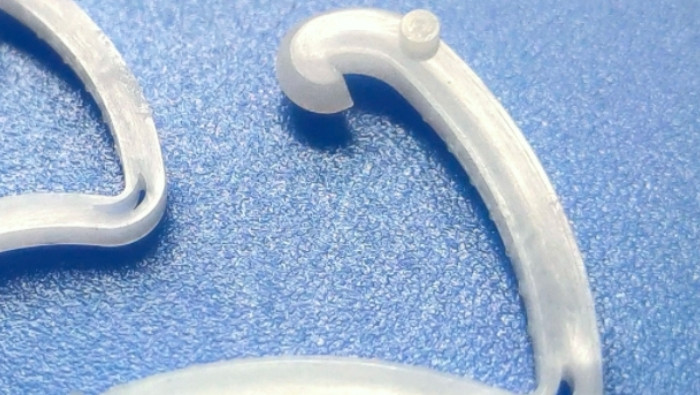
Polyoxymethylene (POM) tissue closure clips, widely used in laparoscopic surgeries, represent a significant advancement in surgical due to their unique material properties and design. These clips, designed to ligate vessels and tissue bundles during abdominal procedures, offer distinct advantages over traditional metal clips. Among their key benefits, radiopacity (X-ray permeability) stands out, alongside mechanical reliability and biocompatibility. This article explores the evidence-based advantages of POM clips, drawing from clinical and technical perspectives.

1. Radiopacity: Uninterrupted Imaging
POM clips are radiolucent, meaning they do not interfere with X-ray, CT, or MRI imaging. Unlike metal clips (e.g., titanium), which create artifacts or shadows in imaging scans, POM clips ensure:
No Artifacts: They leave no traces in postoperative imaging, allowing accurate diagnosis without obscuring anatomical structures.
Enhanced Safety: Patients requiring follow-up scans avoid misinterpretation of clip-induced shadows, reducing diagnostic errors.
2. Biocompatibility and Tissue Response
POM is an inert polymer that minimizes adverse biological reactions:
Non-Toxic and Non-Allergenic: It causes no tissue irritation, necrosis, or foreign body reactions (e.g., granulomas).
Non-Absorbable yet Safe: Unlike biodegradable materials, POM remains stable in the body without degrading, reducing long-term inflammation risks.
3. Mechanical Design for Reliability
POM clips incorporate engineering features that enhance surgical efficacy:
Anti-Slip Teeth and Locking Mechanism: These prevent slippage or dislodgement during tissue compression, even with physiological changes (e.g., edema resolution).
Elastic Hinge Design: Allows adaptive closure around tissues, maintaining secure ligation without excessive pressure.
Durability: Withstands intraoperative forces (e.g., tensile stress ≥5N) without fracture or deformation.
4. Clinical Efficiency and Versatility
Rapid Application: Clips enable quick ligation, reducing surgery time compared to suture ties.
Size Variants: Available in small (S), medium (M), and large (L) sizes to accommodate diverse anatomical needs.
Compatibility: Used with applier instruments for precise placement in minimally invasive surgeries.
5. Material Superiority Over Alternatives
POM’s properties outperform other materials:
Chemical Resistance: Withstands sterilization (e.g., ethylene oxide) without degradation.
Low Friction Coefficient: Facilitates smooth handling during clipping.
Lightweight yet Strong: Offers metal-like strength without adding bulk.
Conclusion
POM tissue closure clips combine imaging compatibility, biological safety, and mechanical precision to modernize surgical ligation. Their radiolucency ensures unobstructed postoperative monitoring, while their design minimizes complications like slippage or tissue damage. As minimally invasive surgeries grow globally, POM clips exemplify how material science enhances clinical outcomes—offering a reliable, efficient, and patient-friendly solution.
References
Clinical data and product specifications from medical device registrations (e.g., China NMPA).
Technical evaluations of POM material properties (e.g., ISO 10993 biocompatibility).

+86 18361958211
marketing@cndonho.com
+86 18361958211
No.2 Zhiwei Road, Qiandeng Town, Kunshan City, Jiangsu Province, China


